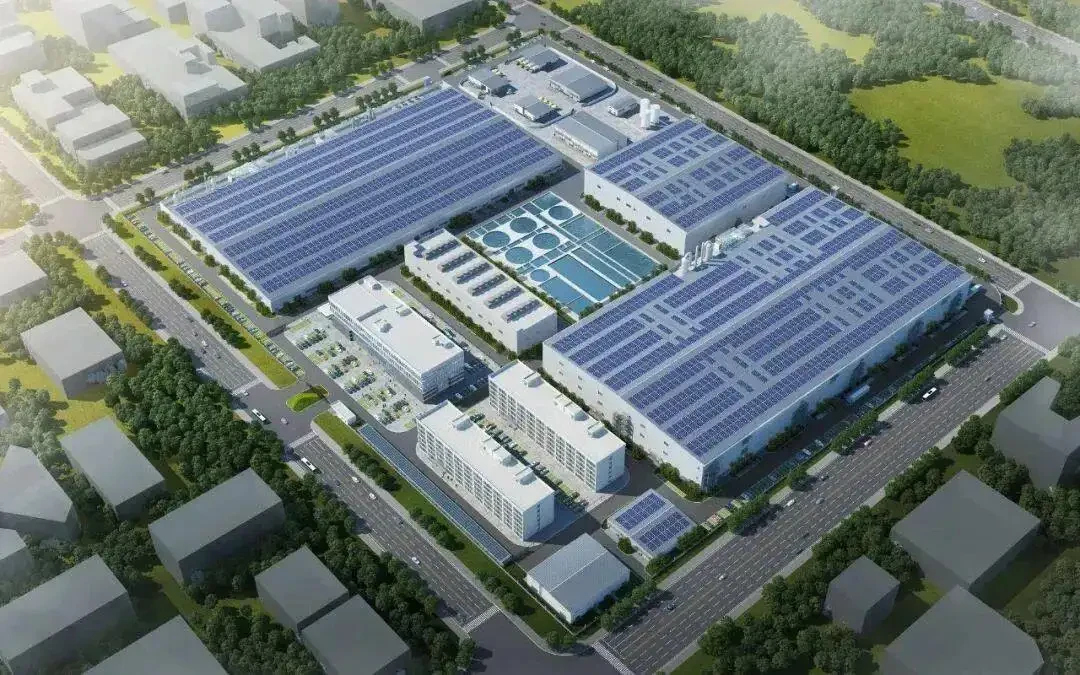
Huahong Wuxi's Phase III Capital Increase of 4.16 Billion Yuan: The New Layout of the Big Fund Phase III and CDB Capital
According to data from Tianyancha App, Wuxi Huahong Grace Phase III Semiconductor Co., Ltd. has recently completed an extremely rare industrial and commercial change: its registered capital has surged from the initial 6.68 million US dollars to 4.17 billion US dollars, representing a staggering increase of 62,325%.
Established in October 2025, this company is less than a year old. In its early days, it was nothing more than a shell company with only meager startup funds; yet a year later, it has suddenly transformed into a super capital carrier valued at tens of billions.
This is not an ordinary financing, but a structural restructuring. Multiple heavyweight new shareholders have entered the market simultaneously, two of which carry distinct characteristics of state capital.
According to the latest industrial and commercial information, the company's equity structure has undergone fundamental changes: Shanghai Huahong Grace Semiconductor Manufacturing Co., Ltd. (the original shareholder) still holds 32% of the shares; the new shareholders Huahong Grace Semiconductor Co., Ltd. holds 25%, Wuxi Xihong Guoxin Phase II Investment Co., Ltd. holds 20%, Huaxin Dingxin (Beijing) Equity Investment Fund (Limited Partnership) holds 15%, and China Development Bank New Policy-based Financial Instruments Co., Ltd. holds 14%.
Huaxin Dingxin is a fund under the National Integrated Circuit Industry Investment Fund Phase III, with a 15% stake; the China Development Bank's new policy-based financial instrument is closely linked to the China Development Bank, holding 14% of the shares. The two together account for 29%, meaning that more than a quarter of the capital comes from China's core policy investment institutions.
What kind of business is this company preparing to engage in? The answer is to pave the way for large-scale heavy asset investment.
The production capacity relay behind the "Phase III"
The name "Phase III" in the company's name is not a random designation. Combined with Huahong Group's layout logic in mainland China, this "Phase III" can almost certainly be confirmed as a new production capacity expansion at the Wuxi base.
Looking back at Huahong's two previous moves in Wuxi. The first phase was Wuxi Huahong Kir, which mainly built an 8-inch wafer production line, focusing on mature process nodes of 0.35 microns and above, and was put into operation around 2014. The second phase was the later announced 12-inch wafer production line construction project, which is positioned in characteristic processes such as embedded non-volatile memory and power devices, directly serving new energy vehicles and industrial control fields. These two production lines constitute Huahong's current main production capacity base.
As the only listed wafer foundry platform under the group, Huahong Grace has long maintained a high capacity utilization rate. Industry data shows that in the past two years, Huahong Grace's overall capacity utilization rate has approached full capacity, especially in the power device and analog chip foundry sectors, where orders have been in short supply.
The establishment of Wuxi Phase III and this huge capital injection were launched against such an industrial background. According to the internationally accepted estimation of the construction cost of a wafer fab, the fixed asset investment for a complete 12-inch wafer production line usually ranges from 2 billion to 3 billion US dollars. If the incremental amount of 4.16 billion US dollars is only used for a single production line, it would be extremely large. A reasonable inference is that the funds will cover supporting infrastructure, R&D centers, and even technical reserves for multiple generations of processes.
As for what process nodes this huge sum of money will be used for — whether to continue using existing mature processes or challenge more advanced nodes — this issue has not yet been disclosed in public registrations or commercial news.
Why did the National Integrated Circuit Industry Investment Fund Phase III enter the market at this time?
Huaxin Dingxin has become the third largest shareholder with a 15% stake, marking the formal and in-depth participation of the National Integrated Circuit Industry Investment Fund Phase III in the Huahong Wuxi Phase III project.
The National Integrated Circuit Industry Investment Fund Phase I was established in 2014, with an initial fundraising of about 1.2 trillion RMB, focusing on investing in packaging and testing enterprises and some material and equipment enterprises. Phase II was established in 2019, with a fundraising of about 2 trillion RMB, gradually tilting towards the design and manufacturing ends. Phase III was established in 2024, with a registered capital of up to 3.44 trillion RMB, far exceeding the sum of the first two phases.
This equity investment releases two key signals: First, the core investment focus of the National Integrated Circuit Industry Investment Fund Phase III remains on the semiconductor manufacturing end. Maintaining and expanding the basic盘 of local wafer foundry is still the highest priority national strategy. Second, there are strategic considerations for choosing Huahong over SMIC. SMIC has high technical sensitivity and faces extremely high external pressure; Huahong excels in characteristic processes, with products targeting civilian fields such as automotive electronics, and has relatively low sensitivity. The National Integrated Circuit Industry Investment Fund Phase III's heavy bet on Huahong can not only achieve production capacity goals but also reduce the impact of geopolitics.
The intervention of the China Development Bank's financial instruments — a profound change in the nature of funds
China Development Bank New Policy-based Financial Instruments Co., Ltd. is established under the leadership of the China Development Bank, positioned as a policy-based financial instrument, different from traditional commercial bank loans or market-oriented equity funds. Its operation mode is more similar to a medium- and long-term industrial guidance fund, usually used to support the construction of major projects in national strategic emerging industries.
This 14% stake injection for the China Development Bank's financial instruments brings a completely different nature of funds to the project: First, the capital cost is low. Compared with the annualized rate of return requirements of market-oriented funds, the holding cost of the China Development Bank's financial instruments is lower, greatly reducing the interest burden under high leverage. Second, the cycle is long and stable. The investment recovery period of policy-based financial instruments is often longer, which can tolerate a longer cultivation period and ramp-up period.
The construction and yield ramp-up of a new wafer fab require a stable operation period of at least three to five years. If the source of funds in the early stage is not stable, withdrawing capital midway will seriously impact production continuity. The addition of the China Development Bank's financial instruments essentially provides another layer of credit endorsement.
The real impact on the industry
Faced with such an astonishing capital increase figure, we must return to common sense to assess its real impact on the industrial chain.
First, the part that cannot be overestimated. 4.16 billion US dollars is not a disruptive scale in the global semiconductor industry. TSMC's investment in a single advanced production line often amounts to tens of billions of US dollars, and Intel maintains an annual capital expenditure of tens of billions of US dollars all year round. For China, the main significance of this sum of money is to accelerate the expansion of its own production capacity and ensure the independent controllability in the field of mature processes, rather than trying to change the global competition pattern overnight. In addition, 4.16 billion US dollars is only the increase in the registered capital of industrial and commercial registration, which does not represent the final total physical investment. Subsequent bank loans and other financial channels are needed to complete the investment closed loop.
Then, the part that cannot be underestimated. In the current complex international trade environment, mobilizing funds of such a scale is of great symbolic significance. It shows that the national will is still continuously increasing efforts in the process of semiconductor autonomy; at the same time, China is moving from scattered investment launched blindly in various regions to a more rational head-concentrated layout. Taking industry giants like Huahong as the core to introduce national-level capital for concentrated breakthroughs is in line with the current industrial integration idea of reducing costs and increasing efficiency.
If you want to track the real progress of this project, the following indicators are worth paying attention to: the production capacity planning and process node information in the NDRC's filing documents, the large-scale equipment procurement bidding records of the enterprise, the capital expenditure details in Huahong Grace's quarterly financial reports, and the recruitment dynamics of relevant executives and technical talents.
This huge factory will not rise from the ground overnight. But it clearly outlines the main theme of China's semiconductor industry in the next stage — using determined policy support to hedge against the uncertain external environment.
Related News
Resistance Testing Methods for Semiconductor Cleanroom Gloves: A Practical Guide
Application Value of Cleanroom Mops in Pharma Industry